
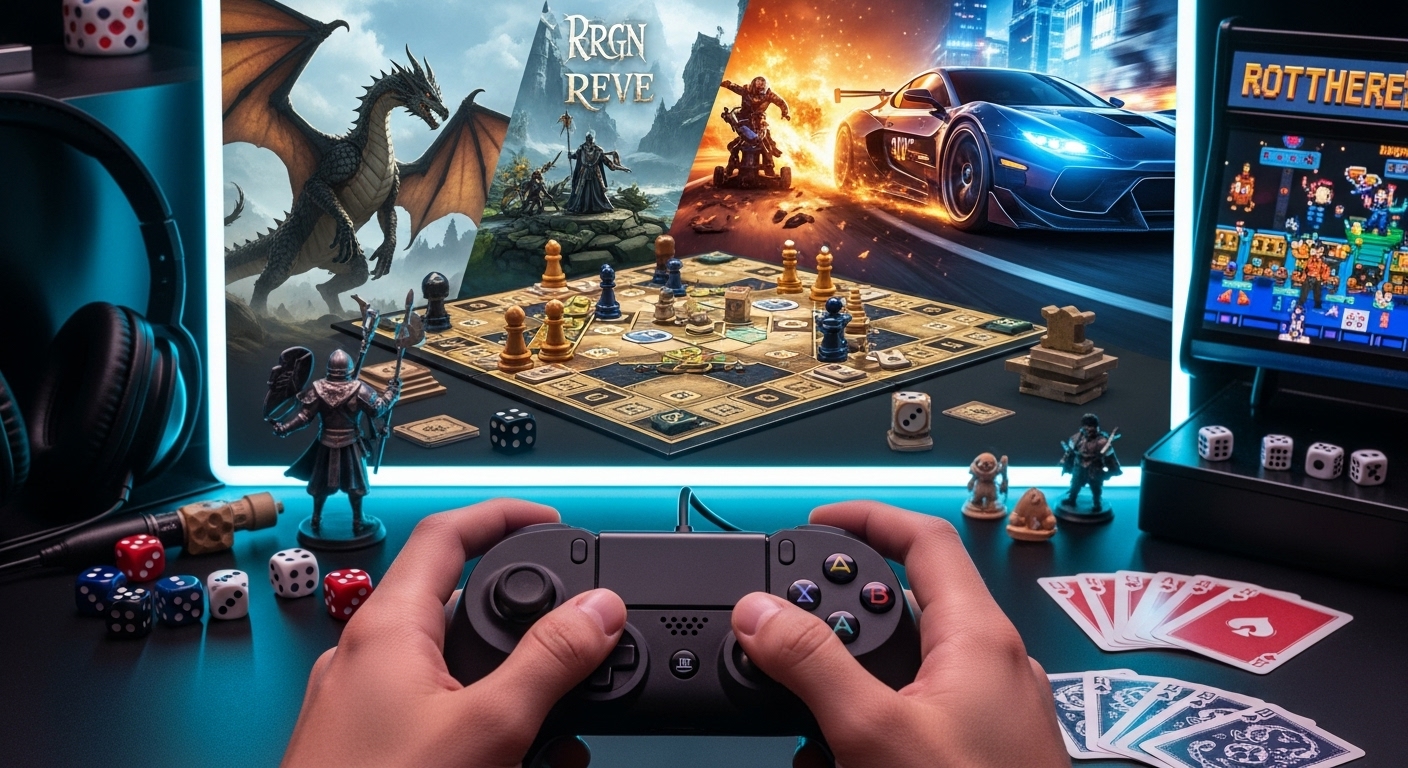
Introduction: The Evolution of Gaming
Video games have evolved from simple pixelated pastimes into a global phenomenon that entertains, educates, and connects millions of people. What began as arcade machines and early home consoles has grown into an industry worth billions, influencing popular culture, technology, and social interactions. Games are no longer just entertainment; they are a platform for storytelling, artistic expression, competitive sports, and community building.
The rise of gaming reflects technological innovation, changing consumer habits, and creative vision. From casual mobile games to immersive AAA titles, the gaming landscape offers a variety of experiences for diverse audiences. Understanding the impact of games today requires exploring their history, technology, player culture, competitive scene, and the future of interactive entertainment.
The Origins of Gaming
The history of video games can be traced back to the 1950s and 1960s, with simple experiments on computers like “Tennis for Two” and “Spacewar!” These early experiments laid the groundwork for an industry driven by imagination and technology.
In the 1970s and 1980s, arcade games like Pac-Man, Donkey Kong, and Space Invaders became cultural icons, attracting a new generation of players. Home consoles, such as the Atari 2600 and Nintendo Entertainment System, brought gaming into households, expanding its reach. During this period, developers began to experiment with storytelling, character development, and increasingly complex gameplay mechanics, setting the stage for modern games.
The Technological Revolution in Gaming
Technology has always been the backbone of gaming evolution. Early 8-bit and 16-bit consoles provided colorful graphics and basic soundtracks, but advancements in computing and graphics processing transformed games into immersive experiences.
Modern consoles and PCs can deliver photorealistic graphics, realistic physics, and intricate AI behavior. Virtual reality (VR) and augmented reality (AR) have introduced new ways to interact with digital worlds, offering immersive environments where players feel part of the action. Mobile technology has also brought gaming to smartphones and tablets, making interactive entertainment accessible anytime, anywhere.
Game engines like Unreal Engine and Unity have enabled developers to create vast, detailed worlds with lifelike animation, advanced lighting, and dynamic interactions. This combination of technology and creativity has expanded the possibilities of what games can achieve.
The Psychology and Appeal of Games
Games captivate players by engaging their minds, challenging their skills, and providing a sense of achievement. They appeal to fundamental human desires, such as mastery, exploration, competition, and social interaction.
Achievement systems, leaderboards, and rewards create motivation, encouraging players to improve and continue playing. Narrative-driven games, on the other hand, immerse players in rich storytelling, emotional arcs, and complex characters. Social games foster collaboration, communication, and teamwork, building communities that extend beyond the virtual world.
The appeal of games lies in their versatility. They can be relaxing, competitive, educational, or artistic, catering to diverse tastes and preferences. This diversity has contributed to the growth of gaming as a mainstream form of entertainment.
Genres and Diversity in Gaming
The gaming industry offers a wide range of genres to satisfy various audiences:
Action and Adventure: Games that emphasize fast-paced gameplay, exploration, and problem-solving. Popular examples include open-world titles with complex narratives and dynamic combat.
Role-Playing Games (RPGs): These games focus on character development, strategy, and storytelling. Players often make decisions that influence the outcome of the game, creating immersive experiences.
Simulation and Strategy: From building cities to managing resources, these games require planning, critical thinking, and foresight. Simulation games often mirror real-world scenarios, offering educational insights alongside entertainment.
Sports and Racing: These games simulate athletic competition and racing events, offering realistic physics and online multiplayer options for competitive play.
Casual and Mobile Games: Designed for short, accessible sessions, these games are easy to pick up and play, appealing to broad audiences with simple mechanics and engaging visuals.
Competitive eSports: Games like League of Legends, Dota 2, and Counter-Strike have created professional competitive scenes, where players compete globally for fame and significant prize money.
The diversity of genres ensures that gaming caters to a wide range of interests, making it inclusive and universally appealing.
Gaming as a Cultural Phenomenon
Games have become a powerful force in modern culture, influencing movies, music, fashion, and social media. Iconic characters, storylines, and game worlds are referenced in mainstream media, demonstrating the cultural impact of interactive entertainment.
Streaming platforms and content creation have amplified gaming’s reach. Platforms like Twitch and YouTube allow gamers to broadcast gameplay, interact with audiences, and build communities. Influencers and professional players have become celebrities, shaping trends and inspiring new generations of players. Gaming conventions and events, such as E3 and Gamescom, celebrate this culture, providing spaces for fans to engage directly with developers, designers, and fellow enthusiasts.
The cultural significance of gaming extends to education and skill development. Games enhance cognitive abilities, problem-solving, teamwork, and decision-making, providing valuable skills applicable beyond virtual worlds.
The Competitive World of eSports
eSports has transformed gaming into a spectator sport. Professional players and teams compete in tournaments for substantial prize money, global recognition, and sponsorship deals. Titles such as Fortnite, Dota 2, League of Legends, and Call of Duty dominate the competitive scene.
eSports events are often broadcasted to millions of viewers worldwide, combining live commentary, analysis, and interactive features that engage fans. Competitive gaming requires exceptional skill, strategy, and teamwork, and many players train for hours daily to maintain peak performance. The rise of eSports demonstrates that games can be more than leisure—they can be a professional career and a form of entertainment on par with traditional sports.
Social and Community Aspects of Gaming
Gaming fosters social connections in both online and offline communities. Multiplayer games allow players to form friendships, collaborate in teams, and compete in global competitions. Social features such as voice chat, guilds, and leaderboards enhance interaction and provide a sense of belonging.
Community-driven platforms, modding communities, and fan creations contribute to the longevity and engagement of games. Players often customize experiences, create new content, and share strategies, fostering creativity and collaboration. These social aspects transform gaming into a dynamic, interactive, and communal activity rather than a solitary pastime.
The Future of Gaming
The future of gaming promises even more immersive, interactive, and accessible experiences. Artificial intelligence will enhance NPC behavior, procedural storytelling, and adaptive gameplay, creating worlds that respond dynamically to player actions. Cloud gaming will allow players to stream high-quality games on low-powered devices, eliminating hardware limitations.
Virtual reality and augmented reality will continue to evolve, offering fully immersive environments where players can interact naturally with the digital world. Cross-platform integration will make gaming seamless across devices, expanding access and engagement. Additionally, blockchain and non-fungible tokens (NFTs) may introduce new models for digital ownership, collectibles, and in-game economies.
Gaming is also poised to play a larger role in education, training, and professional development, using simulations, gamified learning, and virtual environments to teach complex skills and concepts.
Conclusion: Gaming as a Transformative Medium
Video games have evolved from simple entertainment to a multifaceted cultural, social, and technological force. They provide immersive storytelling, competitive challenges, cognitive benefits, and opportunities for social connection. The diversity of genres, platforms, and experiences ensures that gaming appeals to broad audiences and continues to grow as an industry.
As technology advances, games will become more immersive, interactive, and accessible, blurring the line between reality and digital worlds. Gaming is no longer just a pastime—it is an integral part of modern culture, a professional arena, and a medium that influences technology, art, and social interaction. The journey of gaming is far from over, and the next generation of players will continue to shape its evolution, ensuring that interactive entertainment remains a cornerstone of global culture for years to come.