Introduction: Games as a Universal Constant
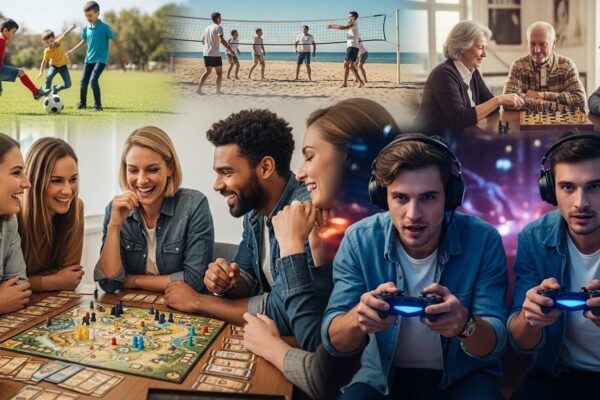
Games have always been an integral part of human culture, serving as a means of entertainment, socialization, education, and personal growth. From the simplest childhood games to the most complex digital worlds, games have the power to unite, challenge, and engage people in unique ways. Throughout history, games have evolved alongside human progress, reflecting the technological, cultural, and societal changes of each era. Today, gaming is more than just a pastime; it is a multibillion-dollar industry that spans across continents and connects people from all walks of life. This post will explore the origins, evolution, and impact of games, while also looking at what the future holds for this ever-expanding world of play.
The Origins of Games: Play as a Human Instinct
Games are as old as civilization itself. The earliest evidence of games dates back thousands of years to ancient Egypt, Mesopotamia, and China. Archaeologists have unearthed ancient game boards and pieces that provide insight into how people of early societies engaged in recreational activities. One of the most famous early games is Senet, an Egyptian game that dates back to 3100 BC. Another notable example is Go, the strategic board game originating in China around 2,500 years ago. These ancient games were more than just entertainment; they were often tied to spiritual beliefs, social hierarchies, and even political power.
In many early civilizations, games were used as tools for education and teaching life skills such as strategy, resource management, and social interaction. Games also served as a way to engage in friendly competition, allowing individuals and communities to bond through shared experiences. For example, games in ancient Greece, such as Petteia, laid the groundwork for modern board games, introducing the concept of rules and structured competition. Through these early forms of play, games demonstrated their ability to bring people together and foster community.
The Rise of Digital Games: Revolutionizing Entertainment
The digital revolution of the 20th century marked a significant turning point for gaming. In the 1970s, the world saw the introduction of arcade games such as Pong, which marked the first instance of video games becoming a mainstream form of entertainment. Though Pong was simplistic by today’s standards, it introduced the concept of interactive entertainment, where players could control the action through a joystick and buttons.
With the arrival of personal computers in the 1980s, gaming began to take on a new dimension. Early computer games like Space Invaders and Pac-Man were primarily arcade staples, but the advent of home consoles such as the Atari 2600 and Nintendo Entertainment System (NES) brought video games into homes across the globe. This shift made gaming more accessible to the masses, enabling people to enjoy their favorite games without needing to leave the house. The simplicity and charm of early console games, like Super Mario Bros., captured the imagination of players young and old, cementing the place of video games in popular culture.
The 1990s marked a further leap in the development of digital games. The introduction of 3D graphics, improved sound design, and more complex game mechanics transformed video games into immersive experiences. Games like The Legend of Zelda: Ocarina of Time and Final Fantasy VII set new standards for storytelling and world-building, with players exploring vast open worlds and encountering characters with depth and personality. At the same time, the rise of multiplayer games, such as Warcraft and Quake, brought the concept of online gaming to the forefront, allowing people to connect with others in real-time, regardless of geographical location.
Mobile Gaming: Gaming Everywhere, Anytime
The early 2000s saw another revolutionary change in the gaming landscape with the rise of mobile gaming. The launch of the iPhone in 2007 and the subsequent development of mobile apps opened up gaming to an entirely new demographic. Casual games like Angry Birds, Fruit Ninja, and Candy Crush Saga became instant hits, offering simple yet addictive gameplay that could be enjoyed on the go. Mobile gaming democratized access to games, enabling people who had never played traditional video games to engage with this form of entertainment.
One of the biggest appeals of mobile games is their accessibility. Unlike console or PC games, which often require specific hardware or gaming systems, mobile games only require a smartphone or tablet. This makes gaming more inclusive, allowing people from all walks of life to enjoy gaming without the need for expensive equipment. Moreover, mobile games are typically designed for short sessions, making them perfect for quick entertainment during commutes or breaks. Games like Pokémon GO took this a step further by combining augmented reality (AR) with mobile gaming, creating an experience that blended the real world with the digital.
The Rise of Esports: Gaming as a Competitive Sport
In recent years, esports have emerged as a dominant force in the gaming world, turning gaming from a recreational activity into a professional sport. Esports, or electronic sports, involve competitive gaming where players or teams compete in tournaments for prizes, sponsorships, and prestige. Games like League of Legends, Dota 2, and Counter-Strike: Global Offensive have become staples of the esports scene, with professional players and teams gaining fame and earning significant amounts of money.
Esports have grown to the point where major tournaments, such as The International for Dota 2 and the League of Legends World Championship, draw millions of viewers both online and in person. The rise of streaming platforms like Twitch and YouTube has further fueled the growth of esports, as fans can watch live streams of their favorite players and teams compete in real time. Esports has transformed gaming into a global spectacle, with fans tuning in from all corners of the world to witness top-level competition.
Moreover, esports have become a viable career option for many gamers. Professional players can earn substantial salaries through tournament winnings, sponsorships, and streaming. Additionally, the esports industry has created jobs in coaching, commentary, event management, and content creation. What was once seen as a hobby has now become a legitimate profession, with esports players achieving celebrity status.
Games as Storytelling: Immersive Worlds and Complex Narratives
One of the most exciting developments in gaming over the past few decades is the increasing focus on storytelling. Games have evolved from simple, goal-oriented challenges to immersive experiences that engage players on an emotional level. The rise of narrative-driven games like The Last of Us, Red Dead Redemption 2, and The Witcher 3: Wild Hunt has shown that video games can tell complex, multifaceted stories that rival the best in literature and film.
These games feature deeply developed characters, intricate plots, and world-building that allow players to lose themselves in the fictional universes. Unlike traditional forms of media, where the audience is a passive observer, games allow players to actively participate in the story. Their decisions and actions can shape the outcome of the narrative, creating a unique experience for each player.
Moreover, games like Detroit: Become Human and Mass Effect allow players to make moral choices that affect the story’s direction, adding a layer of depth and interactivity that traditional forms of storytelling cannot provide. The ability to impact the narrative through gameplay creates a sense of agency and investment that keeps players engaged and emotionally connected to the characters and story.
The Social Power of Games: Connecting People Across the Globe
While gaming was once a solitary activity, online multiplayer games have transformed gaming into a highly social experience. Games like World of Warcraft, Fortnite, and Minecraft allow players to collaborate, compete, and build friendships with people from all around the world. These games have created global communities where players can work together to achieve common goals or engage in friendly competition.
The social aspect of gaming has made it an important tool for socialization. For many people, gaming is a way to stay in touch with friends and family, especially during times when physical gatherings are difficult or impossible. Online gaming allows players to communicate, strategize, and form bonds with others who share similar interests. In this way, games have become a virtual space where people can connect, share experiences, and forge lasting relationships.
Furthermore, gaming has become a platform for self-expression. Players can customize their avatars, create fan art, and even develop mods and fan games. These activities give players a sense of ownership over their gaming experience, allowing them to express their creativity and share their work with the community.
The Future of Gaming: What’s Next?
The future of gaming is brimming with possibilities. With advancements in virtual reality (VR) and augmented reality (AR), gaming is poised to become even more immersive and interactive. VR headsets, such as the Oculus Rift and PlayStation VR, allow players to step into digital worlds and experience games from a first-person perspective, making them feel as though they are actually inside the game. AR, on the other hand, blends the digital and physical worlds, creating interactive experiences that take place in real-world environments.
Cloud gaming is another trend that will shape the future of gaming. With services like Google Stadia and Xbox Cloud Gaming, players can stream games directly to their devices without the need for powerful hardware. This could revolutionize gaming by making it accessible to people who do not own high-end gaming consoles or PCs.
Artificial intelligence (AI) will also play a major role in the future of gaming. AI-powered games can adapt to the player’s skill level, creating dynamic and personalized experiences. Additionally, AI will enable developers to create more realistic NPCs and procedurally generated content, further enhancing the gaming experience.
Conclusion: The Enduring Power of Play
Games have come a long way since their humble beginnings, evolving from simple pastimes to a global industry that influences culture, technology, and society. They have provided entertainment, education, and a sense of community for millions of people worldwide.