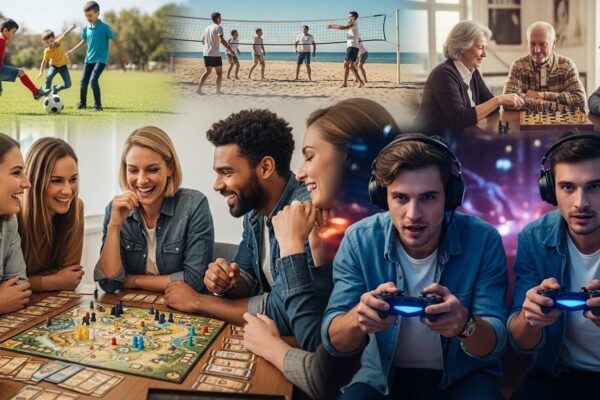
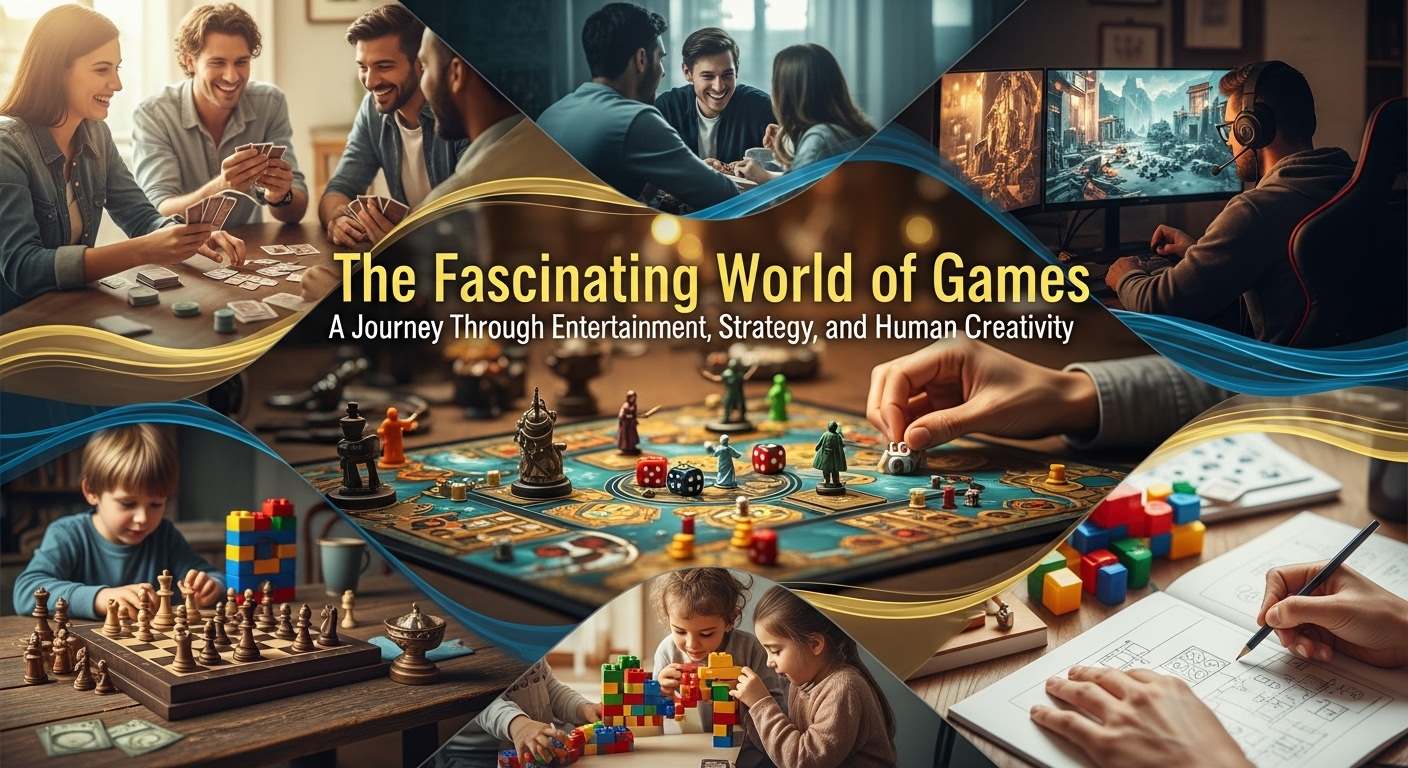
Games have been an inseparable part of human culture since the dawn of civilization. From ancient board games carved into stone to the highly advanced digital experiences of today, games have continuously evolved, reflecting the creativity, intellect, and desires of humankind. They are not merely a source of entertainment but a mirror of human progress, emotion, and technology. Whether played on a field, a board, or a screen, games bring people together, ignite competition, and inspire innovation.
The Roots of Gaming: A Journey Through Time
Long before the first computer ever hummed, humans played games to challenge their minds and bond with others. The earliest known games, like Senet from ancient Egypt or the Royal Game of Ur from Mesopotamia, date back over 5,000 years. These were not just recreational tools; they had spiritual and cultural meanings. Many ancient societies viewed games as reflections of fate and destiny, where the roll of a dice could symbolize the will of the gods.
In ancient Greece, games such as knucklebones were popular, often serving as both entertainment and teaching tools for strategy and skill. The Roman Empire introduced gladiatorial games—brutal yet captivating spectacles that combined performance and combat. Over centuries, the concept of play evolved from survival contests to organized sports and, later, to intellectual pastimes like chess, which emerged in India and spread throughout the world.
The Age of Physical Games and Sports
As societies advanced, games became more structured and competitive. Physical sports like football, cricket, basketball, and tennis emerged as global phenomena. Each sport carried with it a sense of national pride and personal ambition. Stadiums filled with cheering fans became modern-day arenas of human excellence.
Sports also fostered teamwork, discipline, and endurance. They became a symbol of unity and perseverance. The Olympic Games, for example, stand as a global celebration of athleticism and cultural exchange. Players and fans alike found meaning and passion in the shared experience of competition.
While physical games dominated the early centuries, board games and card games provided mental stimulation. Chess, checkers, and later, Monopoly and Scrabble, became household names. These games strengthened cognitive abilities, teaching logic, patience, and foresight. The social aspect of gathering around a table for a friendly competition has kept such games alive even in our digital era.
The Dawn of Digital Gaming
The 20th century marked a revolution in how humans played. The invention of computers and the rise of electronic entertainment gave birth to digital games. In the 1950s and 60s, simple experiments like “Tennis for Two” and “Spacewar!” laid the foundation for what would become a multi-billion-dollar industry.
When the 1970s arrived, arcade machines like Pong and Space Invaders captivated the public. These games were not just entertainment—they represented the early intersection of technology and imagination. As microprocessors advanced, the 1980s became the golden age of video gaming, introducing consoles like the Atari 2600 and the Nintendo Entertainment System.
Icons such as Mario, Pac-Man, and Donkey Kong became symbols of a new culture. Video games were no longer just for scientists and hobbyists—they had entered mainstream life.
The Rise of Console and PC Gaming
The 1990s brought remarkable changes. The competition between Sega, Nintendo, and Sony pushed gaming technology to new heights. Graphics improved, stories became deeper, and soundtracks turned into unforgettable compositions. Players were no longer just spectators—they became heroes, explorers, and creators in virtual worlds.
The rise of PC gaming opened a new frontier. Titles like Doom, StarCraft, and The Sims transformed the idea of what games could be. PC gamers enjoyed customization, mods, and a sense of control over their experiences that consoles initially could not match. The internet’s growth also introduced multiplayer gaming, allowing people from around the world to compete and collaborate in real time.
The Modern Era: Games Without Limits
Today, gaming is a universal phenomenon that transcends age, gender, and geography. Modern consoles and PCs are powerful machines capable of rendering lifelike worlds. Mobile devices have also made gaming accessible to billions. Titles like Fortnite, Minecraft, and PUBG have turned gaming into a global language, connecting friends and strangers across continents.
The line between the real and the virtual is increasingly blurred. Virtual reality (VR) and augmented reality (AR) have brought immersive experiences that were once science fiction. Players can step into a fully interactive world, wield swords, explore galaxies, or simply create art within digital landscapes.
Meanwhile, cloud gaming has begun to reshape accessibility. Players no longer need expensive hardware—only a stable internet connection. The future of gaming seems limitless, with artificial intelligence enhancing game design, storytelling, and even player behavior prediction.
The Psychology of Gaming
Why do humans play games? The answer goes beyond mere entertainment. Games fulfill deep psychological needs. They offer achievement, progression, and reward systems that mirror real-life goals but in a controlled and predictable environment.
For many, games provide an escape from stress or a way to express creativity. Role-playing games allow individuals to live alternate lives, make moral decisions, and explore complex narratives. Strategy games challenge intellect, while puzzle games stimulate the brain’s problem-solving centers.
Moreover, multiplayer games nurture social interaction. Online communities form friendships that sometimes last a lifetime. Players collaborate, compete, and communicate across cultures and languages, demonstrating how play can unite the world.
Storytelling in Games
Modern games are more than just interactive entertainment—they are a storytelling medium. Developers craft narratives that rival novels and films in depth and emotion. Games like The Last of Us, Red Dead Redemption, and God of War tell stories of love, loss, sacrifice, and redemption.
Unlike traditional storytelling, games empower players to influence outcomes. This interactivity creates a bond between the player and the story that no other medium can replicate. Each decision carries weight, and each choice shapes the experience uniquely.
The Art of Game Design
Behind every game lies an army of creative minds. Designers, programmers, artists, musicians, and writers collaborate to bring virtual worlds to life. Game design is both an art and a science. It demands creativity, technical skill, and psychological understanding.
A successful game balances challenge and reward, exploration and guidance. It engages players through feedback loops, visual appeal, and narrative immersion. Every pixel, sound, and animation serves a purpose—to evoke emotion, curiosity, or satisfaction.
As technology evolves, so does the artistry of games. High-definition graphics, realistic physics, and advanced motion capture make modern games stunningly lifelike. Yet, simplicity can be equally powerful; indie games often prove that a strong concept and heartful storytelling can outshine billion-dollar productions.
Games as a Social Force
Games have grown beyond mere pastime—they now influence society, education, and even politics. Esports has turned gaming into a professional sport, where players earn fame, sponsorships, and massive audiences. Competitions fill stadiums and attract millions of online viewers, making esports a legitimate career path for many.
In education, gamification helps students learn through play. Concepts like rewards, levels, and achievements make learning more engaging. Simulation games train professionals in medicine, engineering, and aviation, proving that games can teach skills beyond entertainment.
Moreover, games have become tools for social awareness. Titles addressing mental health, climate change, and social justice encourage empathy and reflection. Through virtual experiences, players can step into others’ shoes, understanding perspectives they may never encounter in real life.
The Cultural Impact of Games
Gaming has shaped global culture. Music, fashion, film, and even language have been influenced by game worlds. Iconic soundtracks, character designs, and memes born from games become part of everyday conversation.
Communities built around games foster creativity and collaboration. Players create art, write fanfiction, and design mods that expand original games into new dimensions. Streaming platforms and content creators have made gaming a shared spectacle, turning play into performance.
The Future of Games
As technology accelerates, the boundaries of gaming continue to expand. Artificial intelligence will likely redefine how games are created and played. Procedural generation already allows infinite worlds to be crafted by algorithms, and future games may adapt dynamically to players’ emotions and decisions.
Virtual reality will become more immersive, merging physical and digital sensations. Haptic feedback suits, brain-computer interfaces, and holographic projections are no longer dreams—they are in development.
Meanwhile, the rise of sustainability and accessibility will shape the industry’s ethics. Developers are focusing on inclusivity, ensuring that everyone—regardless of background or ability—can experience the joy of play.
The Human Side of Games
Beyond technology and profit, games are fundamentally human. They reflect our need to create, connect, and compete. They tell stories of courage and failure, friendship and rivalry. In many ways, games are modern myths—interactive tales that allow us to explore who we are and who we might become.
Even simple games played among friends or families hold emotional significance. A board game night can build bonds, and an online match can spark lasting camaraderie. Games remind us that play is not just for children—it is a vital part of being human.
The Balance Between Play and Reality
While gaming offers endless possibilities, it also raises questions about balance and well-being. Excessive play can lead to isolation or addiction, and the virtual world can sometimes overshadow reality. Yet, when approached mindfully, games enhance life rather than detract from it.
Moderation and awareness are key. Games should inspire creativity, relaxation, and learning—not replace genuine human experiences. Parents, educators, and players themselves all share the responsibility to ensure that gaming remains a positive influence.
Conclusion: The Infinite Game
The story of games is the story of humanity itself—a journey from simple play to complex digital universes. Games have evolved from ancient rituals to modern art forms, shaping our culture and imagination in ways no other medium can. They entertain, educate, and empower.
As we look ahead, one thing remains certain: the human desire to play will never fade. Whether through a ball, a board, or a virtual headset, games will continue to evolve alongside us, offering endless worlds to explore and infinite stories to tell.
In the grand tapestry of human progress, games are not just diversions—they are the heartbeat of creativity, competition, and connection. The world may change, technologies may advance, but the spirit of play will always endure, reminding us that life itself is, in many ways, the greatest game of all.