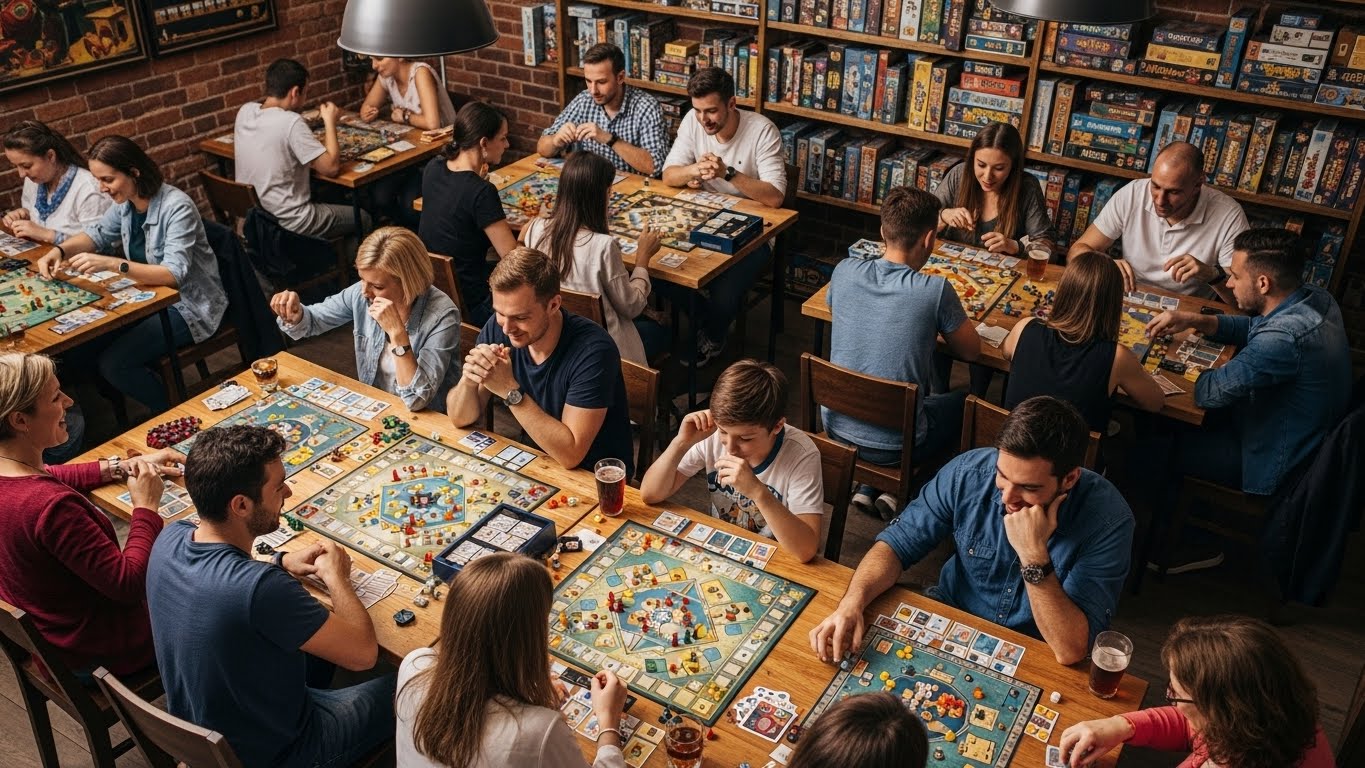
Games have been an essential part of human culture for thousands of years, transcending geographic, cultural, and technological boundaries. What began as simple activities designed to bring people together for fun, challenge, and social interaction has transformed into an expansive global industry. Today, games come in all shapes and sizes, from traditional board games and card games to sophisticated digital experiences that allow players to immerse themselves in vast, virtual worlds.
In this blog post, we will explore the evolution of games, from their humble origins to the cutting-edge innovations that are defining the future of gaming. We will look at the impact of games on society, delve into the various types of games that have captivated audiences around the world, and examine the trends shaping the future of this ever-expanding industry.
The Origins of Games: Early Beginnings
Games have existed in some form for thousands of years. The first known board game, Senet, dates back to ancient Egypt around 3100 BCE. Other ancient cultures, including the Chinese, Greeks, and Romans, also created games to entertain and engage their populations. For example, Go, a strategy board game that originated in China over 2,500 years ago, remains popular today.
In early societies, games often had a dual purpose. While they provided entertainment, they also served educational and ritualistic functions. Games like chess, which was invented in India during the 6th century, required players to use strategy and critical thinking. Meanwhile, the ancient Mayans played a ball game, Pitz, which had ceremonial significance and was often linked to themes of life, death, and the cosmos.
The evolution of games in the 19th and early 20th centuries saw the introduction of classic board games like Monopoly, Scrabble, and Clue. These games brought families and friends together in a new way, with rules that were easy to learn but challenging to master. Card games, too, became central to social gatherings, with games like Poker, Bridge, and Uno continuing to be enjoyed worldwide.
The Rise of Video Games: From Pixels to PlayStations
The real transformation in the world of games came with the rise of video games in the latter half of the 20th century. The advent of computers and arcade machines led to the birth of video games as we know them today.
The 1970s: The Dawn of Digital Gaming
The first commercially successful arcade game, Pong, was released by Atari in 1972. A simple two-player game that simulated table tennis, Pong sparked the gaming revolution, introducing the concept of interactive digital entertainment. In the following years, arcade games like Space Invaders and Pac-Man became cultural phenomena, with players flocking to arcades to compete for high scores.
During this era, home consoles began to emerge, with systems like the Atari 2600 bringing gaming into living rooms across the world. The rise of home consoles allowed players to enjoy games in the comfort of their own homes, marking the beginning of a new era in gaming.
The 1980s: The Birth of the Gaming Industry
The 1980s saw the gaming industry explode in popularity, driven by the introduction of iconic consoles like the Nintendo Entertainment System (NES) and the Sega Genesis. These systems brought with them a new generation of games that became household names, including Super Mario Bros., The Legend of Zelda, and Sonic the Hedgehog.
The 1980s also saw the rise of the arcade culture, with games like Donkey Kong, Galaga, and Street Fighter attracting millions of players worldwide. It was a time when video games became a form of mainstream entertainment, and the industry began to take shape as a major player in global media.
The 1990s: The Age of 3D Graphics and Online Play
The 1990s marked a significant leap forward in gaming technology. The introduction of 3D graphics changed the way games looked and felt. Super Mario 64 for the Nintendo 64 was a groundbreaking title that introduced a fully three-dimensional world, setting the stage for the future of gaming.
Meanwhile, the rise of the Sony PlayStation and the Sega Saturn solidified the importance of home consoles, while PC gaming also gained significant traction with the development of games like Doom and Warcraft. These games introduced fast-paced action, complex graphics, and new gameplay mechanics that kept players hooked for hours.
The 1990s also saw the advent of online multiplayer gaming. Warcraft II and Quake allowed players to compete against one another over the internet, laying the foundation for the massive online multiplayer games that would dominate in the following decades.
The Modern Era of Gaming: Mobile, VR, and Esports
The 21st century has seen gaming evolve in ways that were once unimaginable. Thanks to rapid advancements in technology, gaming has moved beyond traditional consoles and PCs to embrace mobile devices, virtual reality, and esports. These innovations have further expanded the gaming audience and cemented video games as a dominant cultural force.
Mobile Gaming: Gaming Everywhere
One of the most significant trends in recent years is the rise of mobile gaming. With the proliferation of smartphones and tablets, gaming has become more accessible than ever before. Titles like Angry Birds, Candy Crush Saga, and Pokémon Go have attracted millions of players around the world, many of whom may never have considered themselves “gamers” before.
Mobile gaming’s appeal lies in its convenience. Players can pick up their phones and dive into a game anytime and anywhere—whether they’re on a bus, in a waiting room, or relaxing at home. The accessibility and ease of mobile gaming have made it a major player in the entertainment industry.
Virtual Reality (VR) and Augmented Reality (AR)
Virtual reality (VR) and augmented reality (AR) are two technologies that have taken gaming to a new level of immersion. VR allows players to step inside virtual worlds, where they can interact with their surroundings and experience gaming in a fully immersive way. Games like Beat Saber and Half-Life: Alyx have shown the potential of VR, offering experiences that traditional gaming could never replicate.
AR, on the other hand, blends the real world with digital elements, allowing players to interact with their environment in new ways. Pokémon Go is perhaps the most famous example of AR in gaming, but as technology advances, we can expect more innovative uses of AR in games, from interactive story-driven experiences to location-based challenges.
Esports: Gaming as a Competitive Sport
Esports, or competitive gaming, has exploded in popularity over the past decade. What was once a niche hobby for a small group of dedicated players has become a global phenomenon, with professional tournaments drawing millions of viewers worldwide. Games like League of Legends, Dota 2, and Fortnite have become staples of the esports scene, with players competing for massive cash prizes and worldwide recognition.
The rise of esports has had a profound impact on the gaming industry, elevating gaming to a legitimate sport. Professional gamers are now treated like athletes, with sponsors, streaming contracts, and even national teams. Esports has created new career opportunities for players, coaches, analysts, and commentators, making it a major part of the entertainment ecosystem.
The Impact of Gaming on Society
Games are no longer just a form of entertainment; they have become an integral part of modern culture. Video games have a significant impact on society, shaping how we interact with technology, communicate with one another, and even view the world.
Games as a Social Experience
Gaming has always been a social activity, whether people were playing board games around a table or competing in an arcade. Today, gaming has evolved into a global social experience, with players from all corners of the world interacting in shared virtual spaces. Online multiplayer games like Fortnite, Apex Legends, and Call of Duty allow players to team up with friends or make new ones, fostering a sense of community and camaraderie.
For many players, gaming is more than just a pastime; it’s a way to connect with others and build relationships. The rise of streaming platforms like Twitch and YouTube has allowed gamers to share their experiences with millions of viewers, creating a new form of entertainment where fans can interact with their favorite players in real time.
The Educational Potential of Games
Games are also increasingly being recognized for their educational potential. Titles like Minecraft, Kerbal Space Program, and Civilization allow players to explore complex concepts like history, engineering, and environmental science in a fun and engaging way. Educational games are used in classrooms around the world, offering an interactive learning experience that traditional textbooks cannot match.
Additionally, some games are being used in professional settings to improve skills like problem-solving, teamwork, and leadership. Companies are incorporating game-based learning into their training programs to help employees develop critical thinking and collaboration skills.
The Future of Gaming: What’s Next?
As technology continues to evolve, the future of gaming holds exciting possibilities. From more immersive virtual worlds to advancements in AI and machine learning, the gaming industry is poised to undergo even more radical transformations in the coming years.
We may see the rise of fully immersive virtual reality games, where players can explore entire worlds, interact with NPCs (non-playable characters), and experience stories in ways never before imagined. The continued advancement of cloud gaming will make high-quality gaming experiences accessible to anyone with an internet connection, regardless of their hardware.
Artificial intelligence will also play a larger role in gaming, enabling more dynamic, responsive game worlds where every decision you make leads to a unique outcome. The boundaries between gaming and other forms of entertainment, such as movies and television, may also continue to blur as games incorporate cinematic storytelling and interactive elements.