
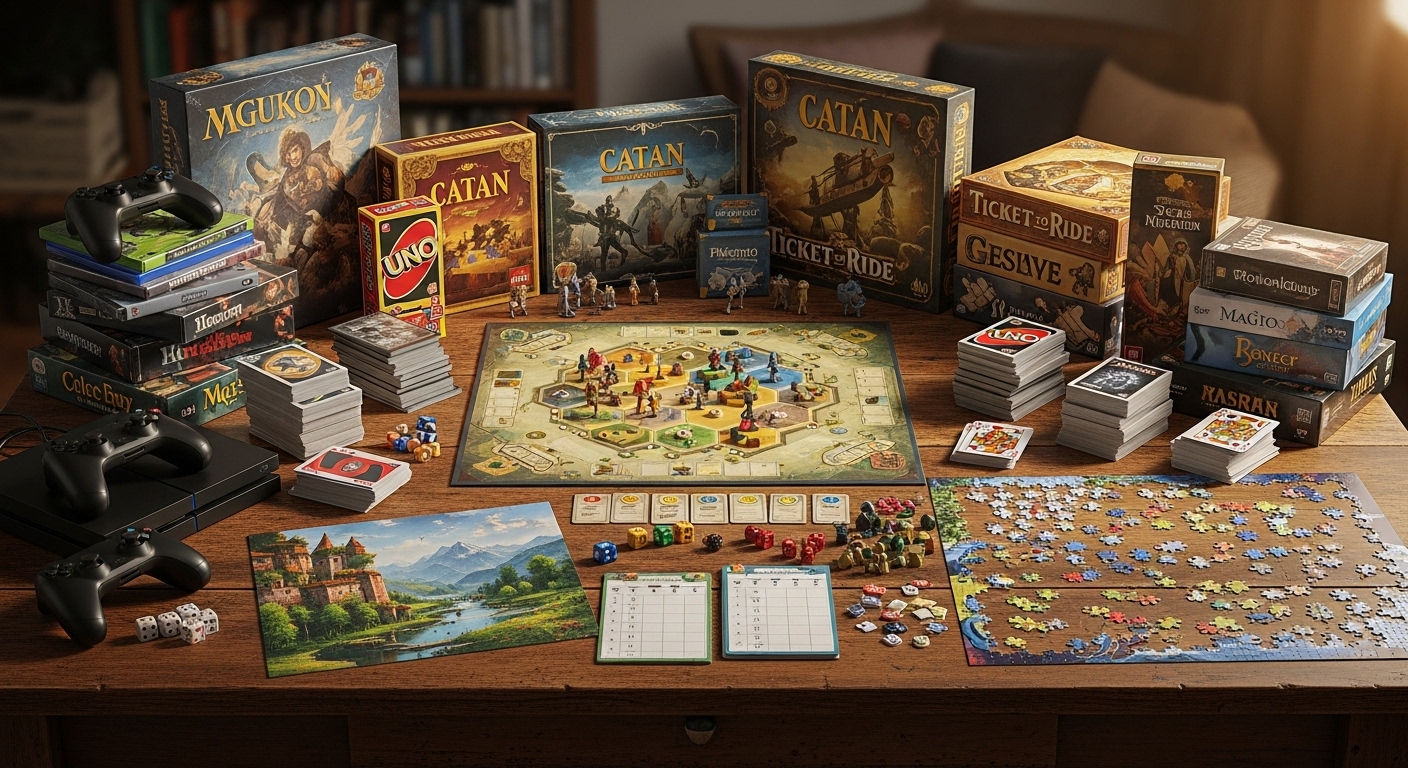
Games have been an integral part of human culture for centuries, serving as both a form of entertainment and a way to bring people together. Whether it’s a simple board game played around the dinner table, a video game played in the comfort of one’s living room, or a virtual reality experience that transports players to other worlds, the world of games has expanded in ways that were once unimaginable. This blog takes you on a journey through the evolution of games, exploring their history, their social impact, and the exciting innovations shaping the future of play.
The Ancient Origins of Games
The history of games dates back thousands of years, with some of the earliest examples originating in ancient civilizations. Board games, in particular, have been a popular form of entertainment for millennia. Some of the oldest known games include the Egyptian game Senet, which dates back to around 3100 BCE, and the ancient Mesopotamian game The Royal Game of Ur. These early games were often more than just entertainment; they served ritualistic or educational purposes, sometimes used to represent life, death, or the gods.
In ancient Greece and Rome, games like Petteia (a type of board game) and Latrunculi (a military strategy game) were played by soldiers and civilians alike. These games were often seen as training tools for strategy, critical thinking, and even diplomacy. Similarly, the game of dice, which has roots in ancient Egypt, became popular across the Roman Empire and was even banned at certain points due to its association with gambling.
As human civilization advanced, games continued to evolve, with new games being created for both social and entertainment purposes. By the Middle Ages, chess had emerged as one of the most prominent games in Europe. Its complexity and depth of strategy made it popular among royalty and intellectuals, and it remains a classic to this day.
The Golden Age of Board Games
In the 19th and early 20th centuries, board games began to take on the form we recognize today. The Industrial Revolution allowed for mass production, which made games more accessible to the public. One of the first commercially successful board games was Monopoly, invented in 1903 by Charles Darrow, which went on to become a worldwide phenomenon. The game’s simple yet engaging mechanics made it a staple in households everywhere, and its lasting popularity demonstrates the timeless appeal of board games.
Around the same time, games like Scrabble, Clue, and Risk were also created, further solidifying the importance of board games in social gatherings and family activities. These games provided opportunities for people to interact, bond, and engage in friendly competition. Board games became a symbol of leisure, bringing together people of different ages and backgrounds.
As television and other forms of media became more prominent in the 20th century, board games began to compete with new forms of entertainment. However, they remained a central part of family life, providing a counterpoint to the growing influence of passive entertainment.
The Rise of Video Games: A New Frontier
The 1970s marked a transformative period in the history of games, as the advent of video games revolutionized the industry. While early video games like Pong (1972) were simple, arcade-based games, they represented the dawn of a new era in interactive entertainment. The appeal of video games lay in their novelty—players could control the action on the screen, creating an immersive experience that was unlike anything seen before.
The late 1970s and early 1980s saw the rise of arcade gaming with classics like Space Invaders (1978), Pac-Man (1980), and Donkey Kong (1981). These games became cultural touchstones, attracting players of all ages and backgrounds to arcades. At the same time, home video game consoles like the Atari 2600 and the Nintendo Entertainment System (NES) brought gaming into people’s homes, making it a staple of leisure time for families around the world.
During the 1990s, the video game industry experienced rapid advancements in graphics and technology, which allowed for more complex and engaging gameplay. Games like Super Mario 64, The Legend of Zelda: Ocarina of Time, and Final Fantasy VII pushed the boundaries of storytelling, design, and world-building. Players could now immerse themselves in expansive, interactive worlds that offered deep narratives and complex mechanics.
As gaming consoles evolved, so too did the types of games available. The genre of multiplayer online games, or MMOs (Massively Multiplayer Online games), gained popularity with titles like World of Warcraft and EverQuest. These games allowed players to interact with one another in real-time, creating massive online communities. The social aspect of gaming was becoming increasingly important, as players no longer had to play in isolation but could connect with people across the globe.
The Social Impact of Games: More Than Just Entertainment
Games have always served as more than just a source of entertainment—they have also played a key role in shaping society. Video games, in particular, have often been at the center of debates about their impact on culture, violence, and social behavior. While some argue that video games promote violence or antisocial behavior, others point out that games can have positive effects, such as improving cognitive skills, fostering teamwork, and providing an outlet for creativity.
For example, studies have shown that playing action games can improve spatial awareness and reaction times. Puzzle games like Tetris and Portal have been praised for enhancing problem-solving skills, while strategy games like StarCraft can improve decision-making and resource management. Even social games, such as The Sims or Animal Crossing, provide players with opportunities to build virtual communities and express creativity.
In addition to cognitive benefits, gaming has become a major form of social interaction. The rise of online multiplayer games has transformed gaming into a global social experience. Players form friendships, join teams, and collaborate with others to achieve common goals. Whether it’s raiding dungeons in World of Warcraft, competing in League of Legends, or building structures in Minecraft, online games create spaces where people can come together, collaborate, and form lasting connections.
Esports, the competitive side of gaming, has exploded in popularity in recent years. Professional gaming leagues, tournaments, and streaming platforms like Twitch have turned video gaming into a spectator sport. Players are now celebrated as athletes, and tournaments can attract millions of viewers, rivaling traditional sports in terms of fan engagement. This growing industry is also providing lucrative career opportunities for players, commentators, and organizers.
Virtual Reality: The Next Frontier of Gaming
The future of gaming is looking more immersive than ever, thanks to virtual reality (VR) technology. VR allows players to fully immerse themselves in a digital world, where they can interact with the environment in ways that were previously impossible. The ability to experience games in 360 degrees, with realistic graphics and motion tracking, creates a sense of presence and immersion that traditional gaming methods cannot match.
Games like Beat Saber, Half-Life: Alyx, and The Walking Dead: Saints & Sinners are leading the charge in VR gaming, offering experiences that are truly transformative. VR headsets, such as the Oculus Quest, PlayStation VR, and HTC Vive, allow players to enter these worlds and physically engage with them, whether it’s shooting enemies, solving puzzles, or exploring expansive virtual environments.
Beyond entertainment, VR has the potential to revolutionize many industries. In addition to gaming, VR is being used for training simulations, education, therapy, and even virtual tourism. As the technology improves, we can expect to see even more innovative applications of VR in gaming and beyond.
The Future of Games: A Blurred Line Between Reality and Fantasy
As we look ahead, the future of games is boundless. We are already seeing the integration of artificial intelligence (AI), augmented reality (AR), and machine learning into gaming, which promises to make games smarter, more adaptive, and more personalized. Games are becoming increasingly dynamic, with AI-controlled characters that learn and evolve based on player behavior, creating experiences that feel more alive and responsive.
The boundaries between real and virtual are also blurring. Augmented reality games, such as Pokémon Go, combine the real world with virtual elements, allowing players to interact with digital objects in physical spaces. This creates a unique hybrid experience that has the potential to transform how we play games in the future.
Additionally, as gaming becomes more interconnected, we may see the rise of persistent, shared virtual worlds where players can live, work, and interact in digital environments. The metaverse, a concept popularized by companies like Facebook (now Meta), could provide a platform where games, social media, and digital experiences converge.
Conclusion
Games have come a long way since their ancient origins, evolving from simple board games to complex virtual experiences. Along the way, they have shaped our culture, brought people together, and provided countless hours of entertainment. As technology continues to evolve, the future of games is more exciting than ever, with virtual reality, AI, and interconnected digital worlds poised to redefine the boundaries of play.
Whether you’re a casual gamer who enjoys a quick game of Monopoly, an esports enthusiast, or a VR adventurer exploring new worlds, games continue to be a vital part of the human experience. As we move into the next era of gaming, it’s clear that the possibilities are endless, and the best is yet to come.